
Overview
Septic line cleaning in Wilson County clears accessible blockages in the pipe from the house to the septic tank. Camera footage may show grease, roots, a damaged pipe or a blocked inlet. A full tank, failed baffle or saturated drain field needs different service.
Scheduling outside Wilson can be discussed for rural properties near Elm City, Saratoga, Stantonsburg, Sims and Black Creek.
Line cleaning focuses on wastewater piping, not removing tank solids. The quote should identify the pipe being cleaned.
The house-to-tank line can be accessed through a cleanout. A drain machine or suitable water jet may clear grease, paper, roots or settled waste.
The tank inlet can be checked after safe access is established. A camera may document the building sewer and help locate a restriction. It cannot prove that the soil beneath a drain field is accepting wastewater correctly.
Tank pumping is separate work performed by a permitted septage management firm. Drain-field repairs fall under on-site wastewater rules and may require a certified contractor and county approval.
What Septic Line Cleaning Includes
A line clog and a full septic tank can cause similar indoor symptoms. Treating the wrong part wastes time and can leave the backup unresolved.
Rural properties across Wilson County may use on-site wastewater systems instead of City sewer. Tank and drain-field layouts vary by parcel.
Why Septic Line Cleaning Matters in Wilson
Wilson County On-Site Wastewater evaluates sites, issues permits and monitors systems under state law. The County also advises checking a septic tank every three to five years to see whether pumping is needed.
Solids should stay in the tank. If the tank is not pumped when needed, solids can reach and clog the drain field. Line cleaning cannot reverse a field that has failed because of soil, hydraulic overload or structural damage.
A pipe blockage may need cleaning. High solids may require pumping. Tank, distribution-box or field damage may need a certified contractor and County review.
How It Works Step by Step
The process begins with symptoms and access. The goal is to confirm the affected component before using cleaning equipment.
1. Review the symptoms. Note which fixtures are slow, when the tank was last checked and whether the yard is wet or has an odor.
2. Locate the system. Existing permits, lids, cleanouts and camera locating can help identify the tank and house-to-tank route.
3. Check the inlet side. The technician looks for standing wastewater, a blockage near the tank or a damaged inlet baffle.
4. Clear the building sewer. The cleaning method is selected for the pipe material, access and type of obstruction.
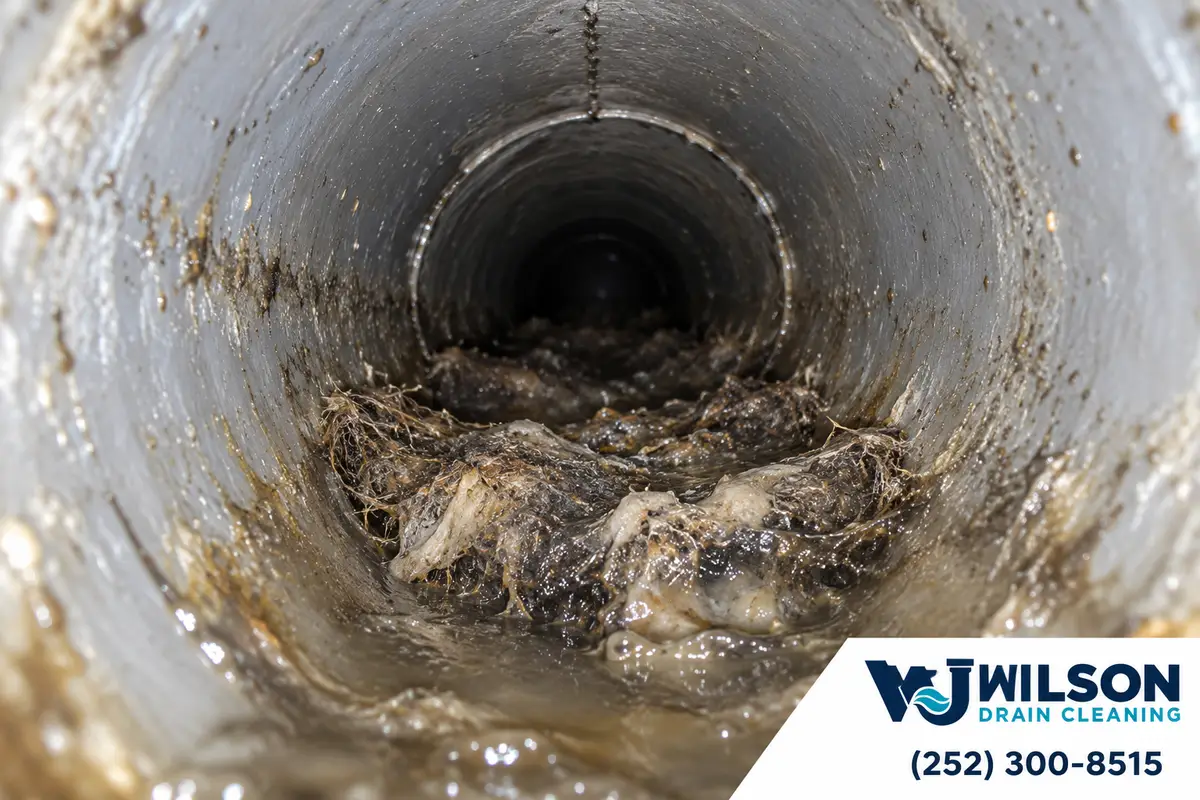
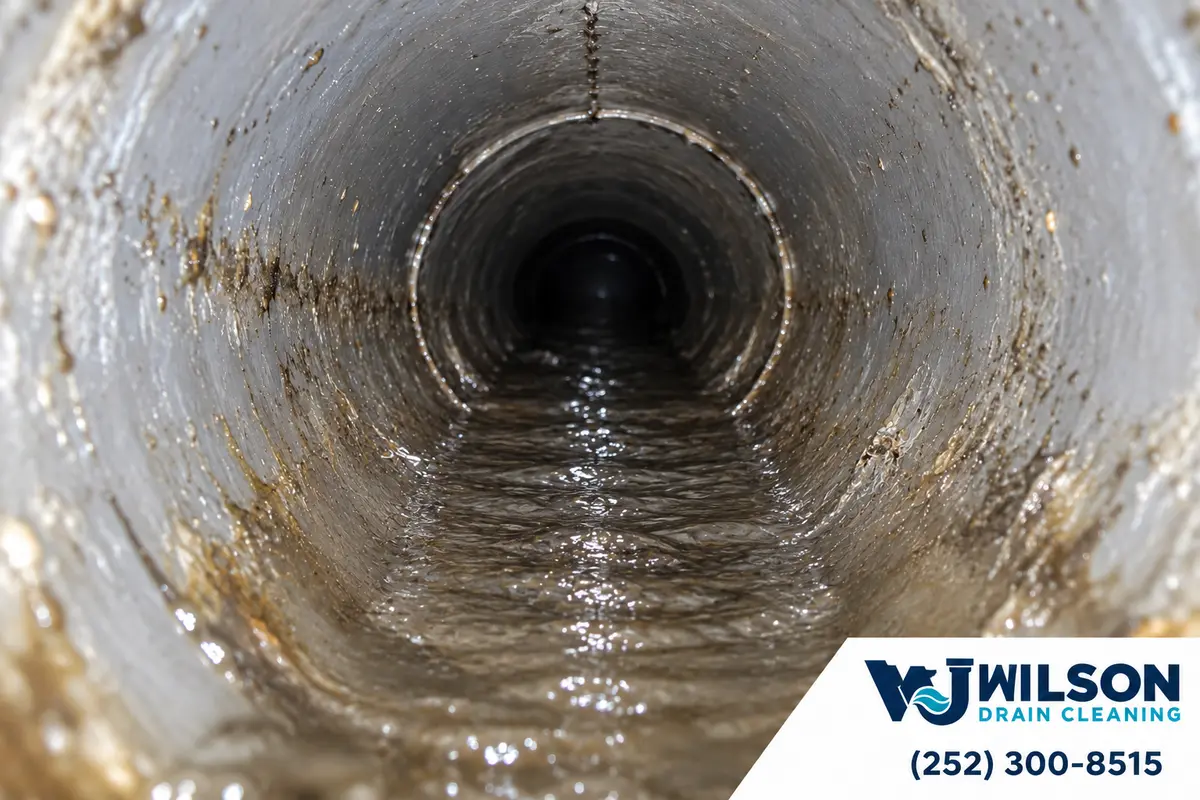
5. Use a camera. A post-cleaning camera inspection can document roots, cracks, offsets or remaining buildup in accessible pipe.
6. Separate pumping from repair. If the tank level, baffles or field indicate a wider system problem, the correct septic provider or County office becomes the next step.
Cleaning may restore flow when the building sewer is blocked. Structural or drain-field failures need more than clearing.
House-to-Tank Blockage
Grease, paper and non-flushable material can collect before the tank inlet. The whole house may drain slowly when this line is restricted.
Roots in the Building Sewer
Roots can enter a cracked joint and catch waste. Cutting them opens the pipe but does not repair the entry point. Repeated root growth may require pipe repair.
Before and After Examples
Clogs and Problems We Handle
Blocked or Damaged Inlet Baffle
The inlet baffle directs incoming wastewater into the tank. A blockage at this point can imitate a clogged building sewer. A broken component needs septic-system evaluation.
Full Tank or Effluent Filter
High solids or a clogged effluent filter can slow the system. These conditions are not fixed by cleaning the house line alone.
Distribution or Drain-Field Trouble
Standing water, sewage odor or unusually green growth over the field may indicate poor dispersal. Heavy equipment and aggressive jetting can worsen a damaged system. The field should be evaluated before cleaning is proposed.
Price depends on access, blockage type, pipe length and tank exposure. Pumping, field work and repair should be quoted separately.
How Much Does Septic Line Cleaning Cost in Wilson?
Published 2026 field-line cost guidance places many field-line cleaning projects between $600 and $1,100 nationally. That is a different scope from clearing only the pipe between a house and tank. It is not a Wilson County quote.
A useful quote should explain:
- Which line is being cleaned
- Whether camera work is included
- Tank-lid excavation or access charges
- Root cutting or water jetting charges
- Pumping by a separate permitted firm
- Permit, inspection or repair costs
One slow fixture usually points to that fixture or branch drain. Several slow fixtures can indicate the building sewer, a full tank or a drain-field problem.
If the yard is dry and the tank has working capacity, a house-to-tank blockage becomes more likely. Camera footage and inlet-side observations can support that diagnosis.
Clogged Line or Full Tank? How to Tell
If wastewater stands high in the tank, the issue may be overdue pumping, a clogged effluent filter or poor flow to the field. Wet soil, sewage at the surface or odor over the drain field needs prompt septic evaluation.
Wilson County Environmental Health administers local on-site wastewater permits. The office is at 1801 Glendale Drive SW in Wilson and can be reached at (252) 291-0468. The County's published fee schedule includes a $100 reconnection fee for an existing septic system, but other work can have different requirements and fees.
Ask for a record of the affected line, access point, findings and result, including any recommended pumping or repair.
Protecting Your Septic System and Well
Do not pour harsh drain chemicals into a septic system. They can create a safety risk for anyone opening the line or tank and may interfere with treatment in the tank.
Private wells also need protection from sewage contamination. Surface wastewater, sewage odor or suspected failure should be reported to Wilson County Environmental Health. Do not open or enter a septic tank. Toxic gases and unsafe structures make confined entry deadly.
Related Services and Where We Offer This
An accessible building sewer may first need main line cleaning. Buyers considering a rural property can request a home buyer sewer scope while recognizing that a line camera is not a full septic inspection.
Nearby towns
FAQs
How Do I Know if the Septic Line Is Clogged
Several slow fixtures with a normal-looking yard may point to a blockage between the house and tank. The inlet level and camera findings help confirm it. One slow sink or tub is more likely a local fixture or branch-drain problem.
Is Septic Tank Pumping Included
Tank pumping is a separate regulated service. A permitted septage management firm must remove and transport the tank contents. The booking and quote should identify the pumping company, permit status, price and whether line cleaning happens before or after pumping.
Who Handles Septic Repair Permits in Wilson County
Wilson County Environmental Health administers on-site wastewater permits and system records. Call (252) 291-0468 before altering a tank, distribution component or drain field. The office can explain the application, contractor and inspection requirements for the property.
Get a Free Quote
Call (252) 300-8515 with the property address, affected fixtures and the last known tank service date. Details about the problem can be provided through the get a quote form.
Learn more about the technicians before scheduling.
Call (252) 300-8515 ↗