Overview
Clear yard drains, buried downspout lines and driveway drains before the next heavy rain leaves water beside the house.
Price approved before work.
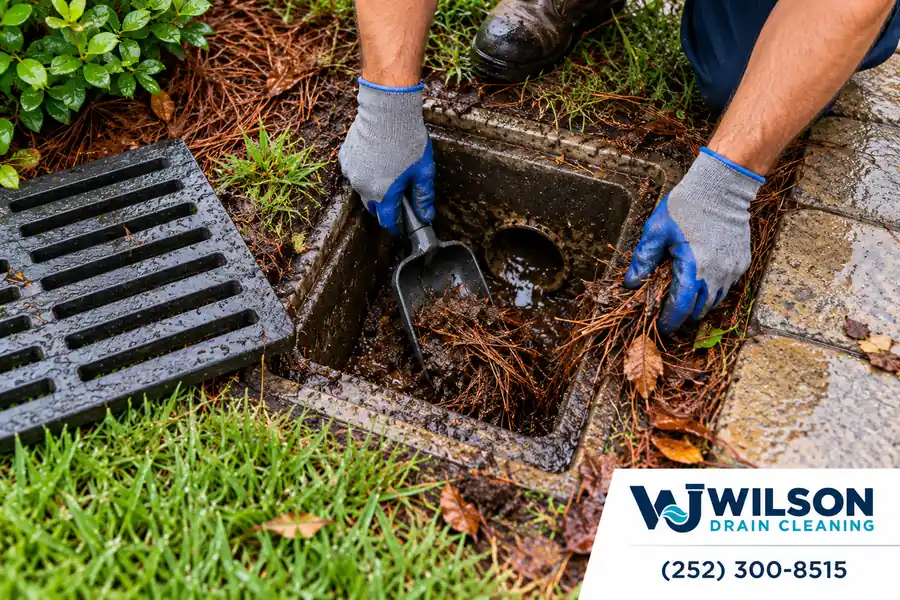
Storm drain cleaning in Wilson clears yard drains, buried downspout lines, French drains and driveway drains packed with pine straw, leaves and silt. Rainwater can then leave the yard instead of pooling near the foundation.
Each inlet, pipe and outlet must be checked so debris is not pushed into another blockage.
Buried Downspout Lines
These lines carry roof water away. Leaves, shingle grit, roots and soil can slow the pipe. Crushed sections need repair.
Yard Drains and Catch Basins
Low grates and catch basins collect runoff. Pine straw, mulch, sediment and stones can cover the grate or settle below it.
French Drains
A French drain moves groundwater through gravel and perforated pipe. Cleaning can clear an accessible pipe or outlet.
Driveway and Channel Drains
Channel drains catch water across patios and sloped drives. Gravel, leaves and silt can pack the channel or outlet.
What Storm Drain Cleaning Includes
Pop Up Emitters and Buried Outlets
Emitters can become buried by turf or held shut by mud. Locating helps trace an unknown route.
Wilson's flat ground slows runoff. A partly blocked private drain may handle a light shower but overflow during a short, hard storm.
Why Storm Drain Cleaning Matters in Wilson
Hominy Swamp runs through central Wilson. City officials describe roughly 18 miles with only about one foot of fall. That small change helps explain slow drainage during heavy rain.
The City's Hominy Creek stormwater project includes water-quality parks and underground storage to slow runoff and reduce erosion. Private drains face the same basic need: a clear inlet, open pipe and working outlet.
Wilson also tells residents to keep leaves, pine straw and other yard debris out of gutters, storm drains and catch basins. A blocked yard drain can leave standing water, saturate planting beds and send water toward a crawl space or garage.
How It Works Step by Step
The work starts at the surface and follows the water path. This prevents a clear grate from hiding a deeper pipe problem.
1. Locate the line and outlet. The inlet, pipe route, discharge point and visible low areas are checked.
2.
3. Clean the pipe. A suitable hose or jetter works from the safest access point. The method depends on pipe material and condition.
4. Inspect a line that stays slow. Camera and locating can reveal roots, crushed corrugated pipe, a separated joint or a buried outlet.
5. Test the full route. Water is run through the inlet and watched at the outlet. Pooling around the foundation is checked before the area is cleaned.
Standing water may come from the grate, buried pipe or an outlet hidden by grass.
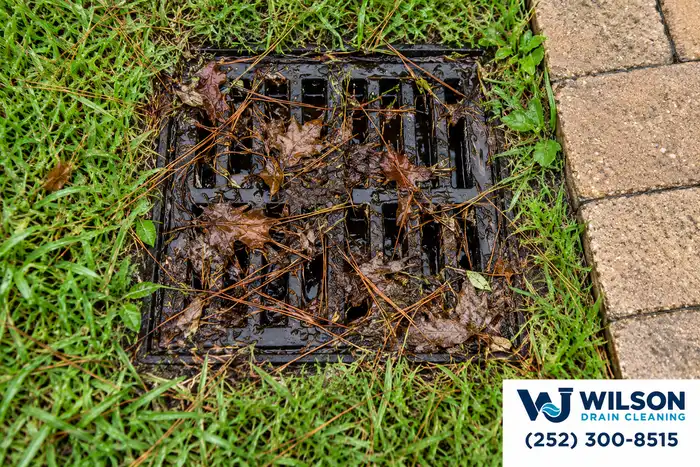
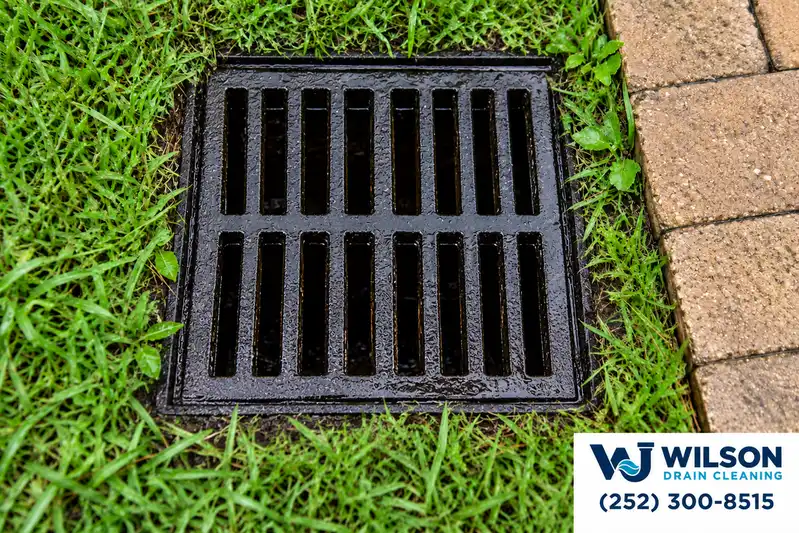
Before and After Examples
Clogs and Problems We Handle
Pine Straw and Leaves
Light debris mats across grates and can collect at downspout elbows.
Silt and Sand
Soil settles in low basins and flat pipe. Surface cleaning will not clear a packed buried run.
Roots in Buried Lines
Fine roots enter loose joints. Cleaning restores flow, but the opening may still need repair.
Crushed Corrugated Pipe
Corrugated pipe can flatten under soil, vehicles or settlement. Cleaning cannot reopen a crushed wall. The damaged section must be located.
Buried or Stuck Emitters
Grass, mulch and soil can hide an emitter. An open pipe still backs up when water cannot discharge.
Gravel in Driveway Drains
Loose stone can fill a channel or outlet. It must be removed instead of forced deeper.
How Much Does Storm Drain Cleaning Cost in Wilson?
A straightforward yard drain or buried downspout cleaning often falls near $150 to $400 in current planning references. Long French drains, difficult access, heavy sediment and crushed pipe can cost more. This is not a Wilson quote.
Price depends on:
Storm Drains vs Sewer Drains: Who Fixes What
Private yard drains are the property owner's responsibility. Street drainage problems and blocked public inlets should be reported to the City of Wilson.
The City stormwater FAQ directs flooding and blocked-drain concerns to the Stormwater Division through its hotline or the Fix It Wilson app. Street water buildup can also be reported to Utility Dispatch at 252-399-2424. City staff decide whether the problem falls within public maintenance responsibility.
Rainwater must not enter the sanitary sewer. Roof drains and downspouts should discharge to an approved yard or stormwater route, not a toilet or household sewer line. Extra rainwater can overload sanitary pipes and contribute to sewer overflows.
Protecting Your Home, Pipes and Yard
Jetting water is directed away from foundations, doors and finished areas. Pressure is matched to the pipe. Work stops when a camera shows a crushed, separated or fragile section.
Debris is collected instead of washed toward a street inlet.
Related Services and Where We Offer This
Water rising from an indoor low drain belongs under floor drains. Sewage entering a building during a storm may need emergency drain service. Outdoor runoff without sewage points to the yard drainage route instead.
FAQs
Why Is Water Pooling Near My Downspout?
The buried downspout line may be clogged with leaves or silt, crushed, or blocked at its outlet. Water then spills near the building. Cleaning restores flow when the pipe is open and stable. A crushed section needs repair.
Who Cleans the Storm Drain on My Street in Wilson?
Report street flooding or a blocked public inlet to the City of Wilson. The Stormwater Division can investigate through its hotline or Fix It Wilson. Drains installed inside a private yard normally remain the property owner's responsibility.
Can My Downspouts Connect to the Sewer?
No. Roof water should not enter the sanitary sewer. Rainwater can overload sewer pipes and contribute to overflows. Downspouts should discharge to an approved yard or stormwater route that carries water away from the building.
Get a Free Quote
Call (252) 300-8515 for scheduling and a price range. Describe the affected fixtures and available access through the get a quote form.
Learn more about the technicians before scheduling.
Call (252) 300-8515 ↗