Overview
Main sewer line cleaning clears the pipe that carries waste from the whole house to the City sewer. If the tub, toilets and floor drain back up together, the main line needs attention. Cleaning starts from an accessible opening. A flow test and camera check can then show whether roots, grease, settled waste or damaged pipe caused the stoppage.
The job should restore flow and identify the reason for the blockage. Clearing a small path without checking the line can leave the same problem behind.
Cleanout Access
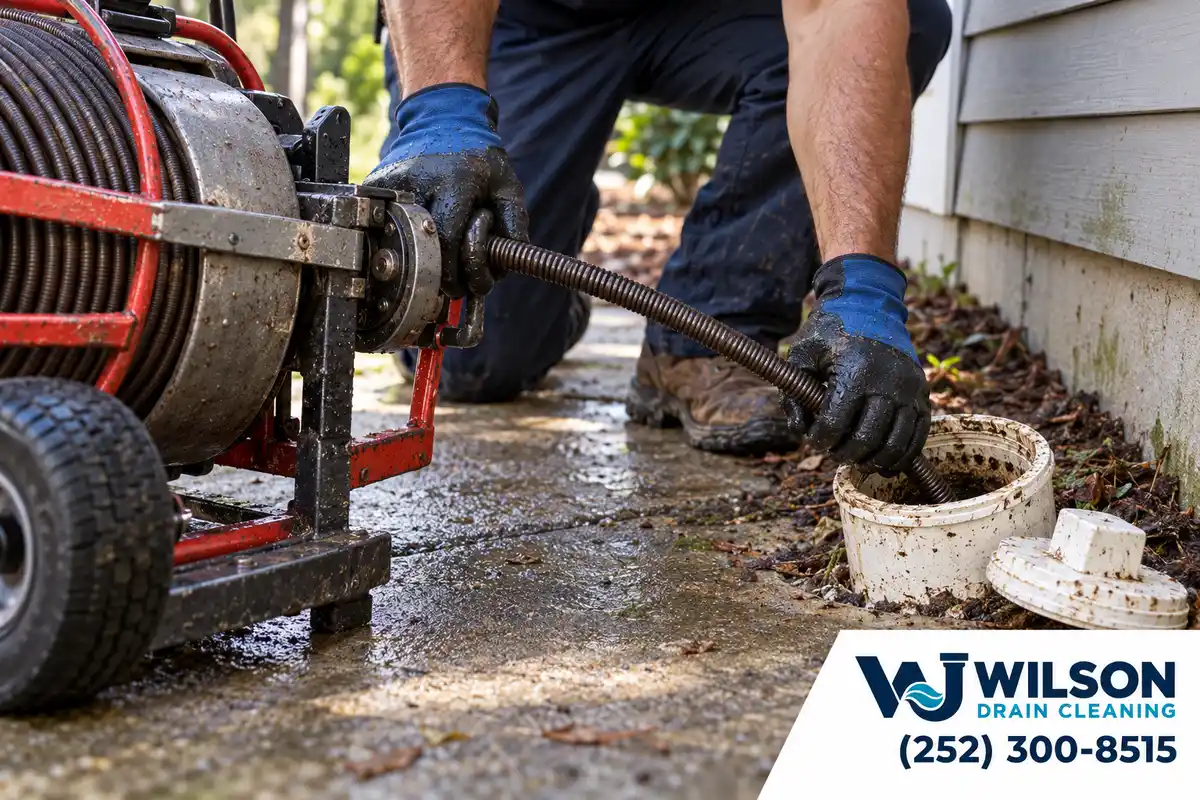
A house cleanout gives direct access to the lateral. It is often near the foundation or in the yard. Some properties also have a cleanout close to the street. When no usable cleanout exists, access may require removing and resetting a toilet.
Cable Cleaning
A sewer cable carries a cutter through the pipe. The cutter must match the line size, material and blockage. A small head may open a narrow channel but leave roots or heavy buildup on the pipe wall.
Water Jetting
Water jetting washes grease, sludge and loose buildup through the line when the pipe condition allows it. Fragile, collapsed or badly separated pipe needs a different plan.
What Main Sewer Line Cleaning Includes
Flow Testing and Camera Work
Water is run through the system after cleaning. A camera can then check accessible sections for remaining roots, scale, standing water, offset joints or breaks. Written notes should identify what was seen and where it appeared.
Why Main Sewer Line Cleaning Matters in Wilson
The lowest drain usually shows a main line clog first. In a Wilson home, that may be a first floor tub, shower or floor drain.
Older parts of Wilson include homes with mature trees and buried laterals made from clay tile or cast iron. Roots can enter loose clay joints. Cast iron can develop heavy internal scale. Orangeburg pipe can deform. Even PVC can hold waste when a joint shifts or the line lacks enough fall.
Wilson's relatively flat ground can make slow flow more noticeable. Wipes, grease and debris settle where a line has poor slope or a belly. Cleaning can remove the material. It cannot correct the low spot that allowed the buildup.
The City of Wilson lists roots, fats, oils, grease, pipe failures and shifting ground among causes of sewer problems. That does not prove the condition of a private lateral. It does show why the blockage should be cleared before the pipe is judged.
How It Works Step by Step
The process starts with the fixture pattern and ends with evidence. Each step narrows the cause.
1. Confirm a main line problem. Several fixtures slowing or backing up together point toward the building sewer. One slow sink usually points to a smaller branch line.
2. Find the cleanouts. The house cleanout provides service access. The property line cleanout helps show whether the stoppage is on the private or City maintained side.
3. Run the right cable and cutter. The tool is selected for the pipe and likely blockage. Resistance, material on the cutter and the distance reached help guide the next step.
4. Use water jetting when suitable. Hydro jetting can remove grease, loose scale and remaining debris. Pipe condition must support the pressure.
5. Test the flow. Toilets and other fixtures are run while the lowest drain is watched. The line should carry normal discharge without rising or gurgling.
6. Inspect with a camera. A camera inspection can show roots, pipe material, joint condition and water sitting in a low section.
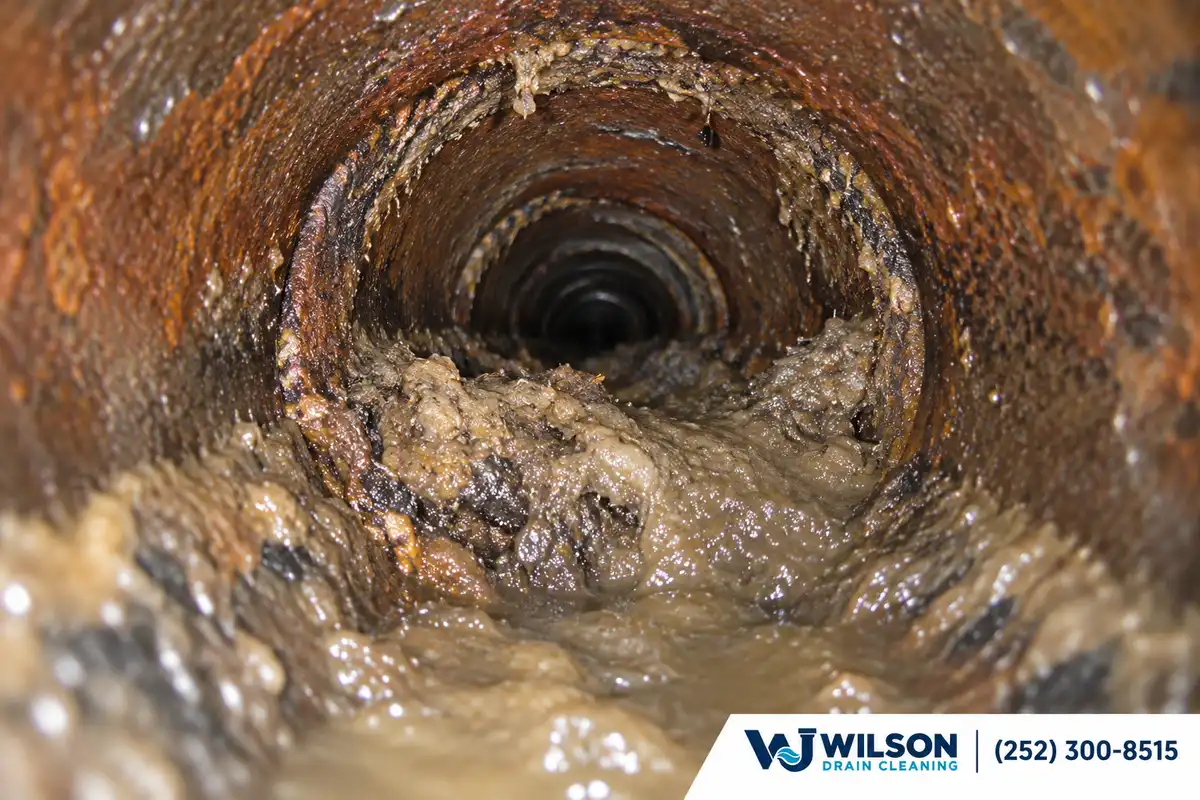
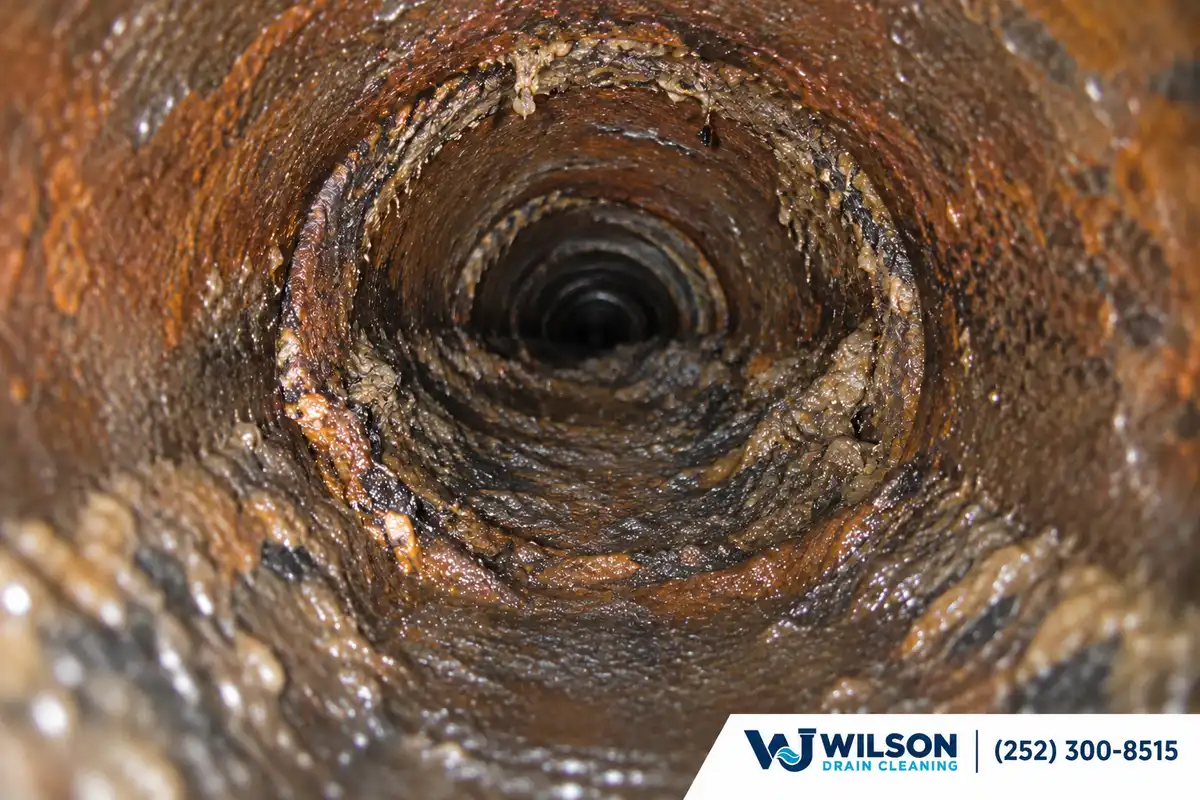
Before and After Examples
Clogs and Problems We Handle
Cleaning solves obstructions. It also exposes structural problems that may need monitoring or repair.
Tree Roots
Roots enter through a joint or crack and trap paper and waste. Tree root removal restores the opening. The entry point remains until the pipe is sealed or repaired.
Grease and Soft Buildup
Grease coats the pipe and catches food particles, paper and wipes. A cable may open the center. Jetting can clean more of the wall when the line is stable.
Wipes and Flushed Objects
Wipes do not break down like toilet paper. They can snag on roots, scale and rough joints. Toys, hygiene products and other objects may lodge near a bend.
Bellies and Offset Joints
A belly is a low section that holds water and waste. An offset joint narrows the opening. Cleaning removes trapped material but does not change pipe alignment.
Broken or Collapsed Pipe
A cable cannot reopen a collapsed wall. Camera footage and locating help mark the damaged section before repair options are discussed.
How Much Does Main Sewer Line Cleaning Cost in Wilson?
Cost depends on access, blockage severity, cleaning method and whether the line can be inspected afterward. Pulling a toilet usually adds time compared with using an open cleanout.
Project planning places many main line cleaning jobs around $175 to $600. Current 2026 Raleigh market data reports a common range of about $287 to $632. These figures are guidance, not a Wilson quote.
Price can change with:
- Cleanout access or toilet removal
- Roots, grease, wipes or a solid object
- Cable cleaning or water jetting
- Pipe length and number of bends
- Camera recording and locating
- Evening, weekend or urgent scheduling
- Repair needs found after cleaning
A clear written price should separate cleaning from any later repair.
Stop using water. Do not flush another toilet or start a washing machine. Every gallon entering the line can rise through the lowest fixture.
What to Do Right Now If Your Main Line Backs Up
Keep children and pets away from sewage. Avoid direct contact. The City warns that sewer overflows can carry bacteria and viruses. If sewage has spread through a finished room, sewer backup cleanup may be needed after the line is open.
Check the property line cleanout if it can be reached safely. Pressure or standing water at that point may indicate a blockage on the City side. Call Wilson Utility Dispatch at 252 399 2424. If the cleanout flows freely, the stoppage is likely closer to the house. The full responsibility rule is explained on the sewer line services hub.
Do not open a cleanout cap that is under pressure. Sewage can release suddenly.
Protecting Your Home, Pipes and Yard
Wastewater should stay contained during the work. Surfaces exposed to sewage need cleaning and disinfection. Tools and hoses should not cross clean areas without protection.
The cleaning method must fit the pipe. Excess pressure or an oversized cutter can damage a fragile line. Excavation should not begin until the defect is located and buried utilities are marked.
Recurring roots may need cutting and a repair plan. A camera can document a low spot, offset joint or damaged section. Homes without safe access may need cleanout installation.
Main line service is available in Wilson with 24/7 emergency dispatch. Nearby service coverage includes Stantonsburg and Sims.
Related Services and Where We Offer This
Where Is My Sewer Cleanout
Most Wilson homes have a capped cleanout near the foundation or in the yard. Some have a second opening near the street. Landscaping can hide a cap, and some older homes have no cleanout.
FAQs
Can the Main Line Be Cleaned Without a Cleanout
Yes. A technician may remove a toilet and work through the flange. This takes longer and can cost more. Many property owners later add a cleanout for easier access.
Why Does My Main Line Keep Backing Up
Recurring backups often come from roots, a belly that holds waste, an offset joint or grease left on the pipe wall. A camera check after cleaning can show which condition is present.
Get a Free Quote
Call (252) 300-8515 when several fixtures slow down, gurgle or back up together. Describe the affected fixtures and available access through the get a quote form.
Learn more about the technicians before scheduling.
Call (252) 300-8515 ↗