Overview
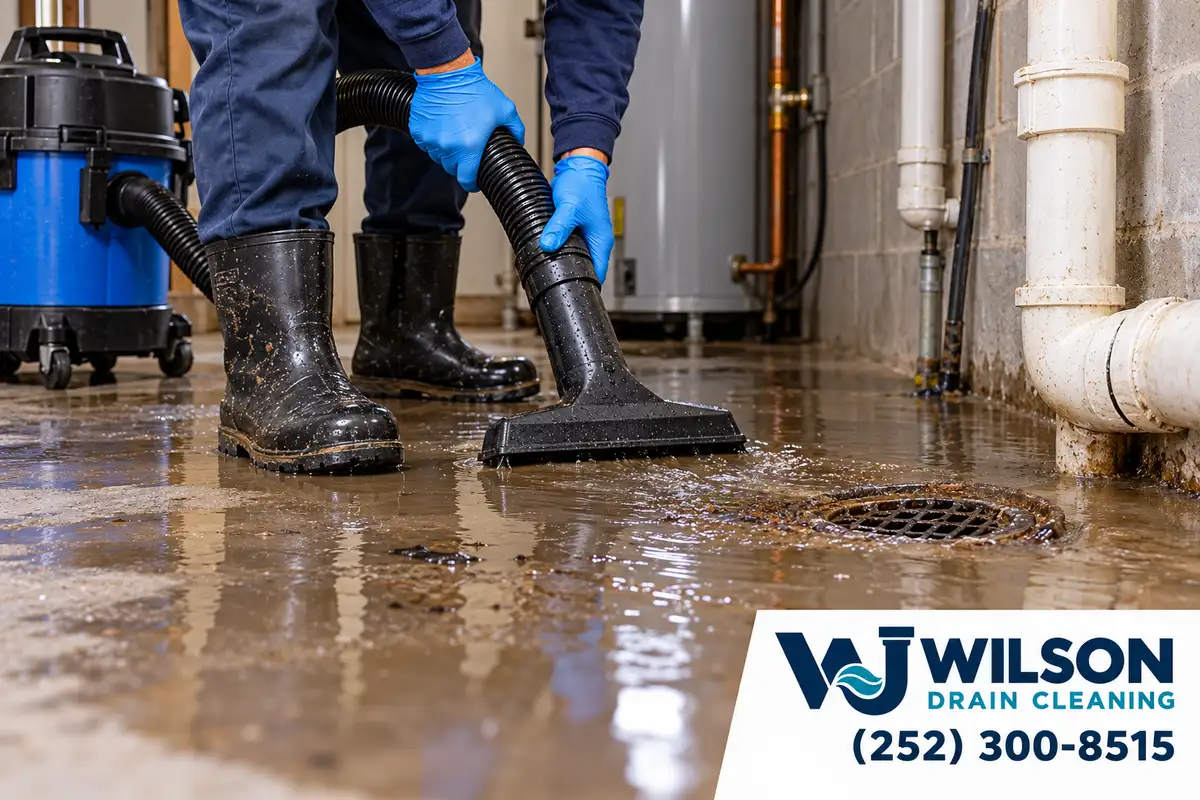
Sewage rising through a tub, floor drain or toilet means wastewater has nowhere else to go. Stop using water and call (252) 300-8515 for sewer backup service in Wilson NC.
Sewer backup service clears the blockage pushing sewage into the home, then identifies why it happened. The first check determines whether the stoppage sits on the private side or the City of Wilson side.
Service availability can also be discussed for Elm City, Lucama, Stantonsburg, Black Creek and Sims.
The visit starts with the affected fixtures, lowest drain and property-line access point. These details show whether the problem affects the building sewer.
What Sewer Backup Service Includes
Typical work may include:
- Stopping additional wastewater from entering the backed-up line
- Checking the cleanout without opening a cap that is under pressure
- Clearing an accessible private main-line blockage
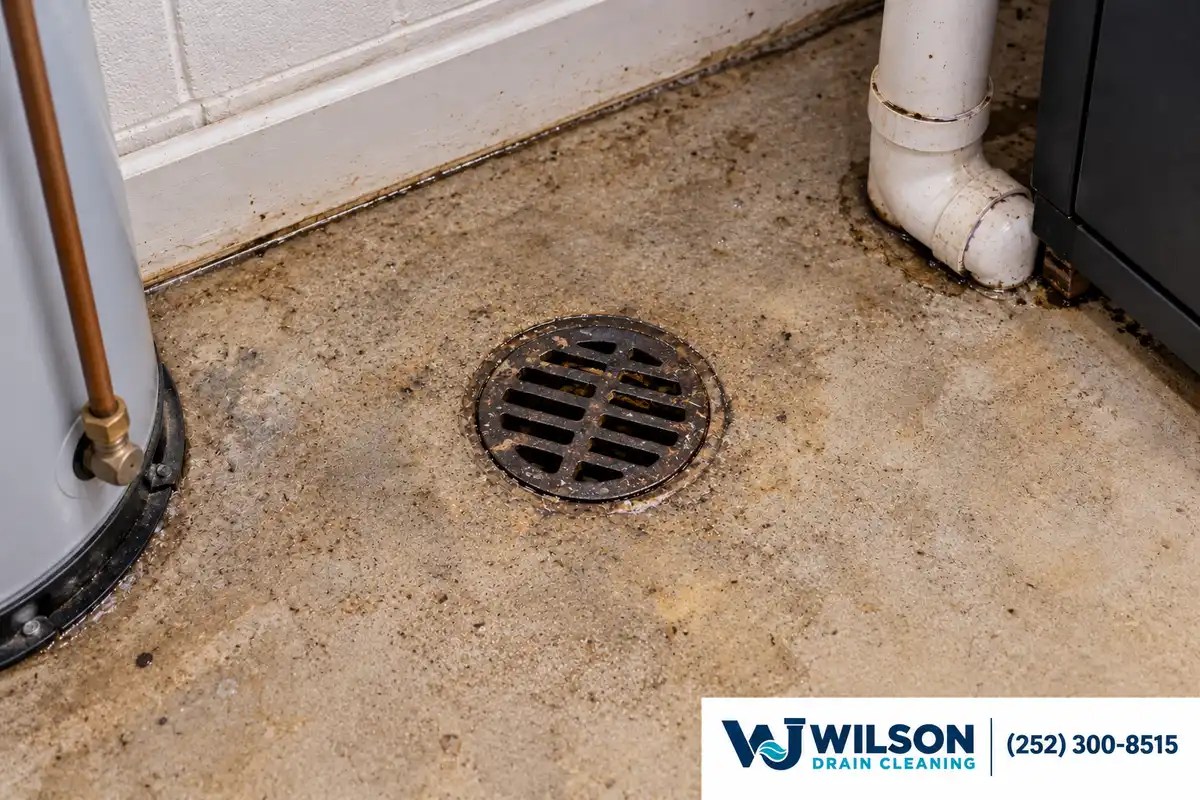
- Testing drainage after the line opens
- Inspecting an open line when repeat trouble, roots or damage are suspected
- Recording the blockage location and visible pipe condition
- Explaining when a restoration company or pipe repair specialist is needed
A drain-cleaning visit removes the blockage. It does not automatically include water extraction, removal of contaminated drywall or carpet, structural drying, or reconstruction. Those tasks usually need a qualified restoration company.
Why Sewer Backup Service Matters in Wilson
Wilson properties can face private sewer clogs and public-system overflows. The symptom may look the same inside the house, but responsibility depends on the blockage location.
The City of Wilson's wastewater report recorded 15 reportable sanitary sewer overflows from July 2023 through June 2024. Nine were attributed to grease. Two large events at 2658 Tilghman Road N were linked to inflow and infiltration during severe rain. They released an estimated 48,000 gallons on March 7, 2024 and 29,100 gallons on March 28, 2024.
How It Works Step by Step
Those records do not mean every backup near Tilghman Road, Westwood or Downtown Wilson comes from the public sewer. A private lateral can clog during the same storm. The correct first step is to stop water use and determine which side is holding wastewater.
Wilson maintains the sewer line beginning at the property-line cleanout. The property owner is responsible for the section between the building and that cleanout. Not every property has a visible cleanout. Landscaping, soil or an older layout may hide it.
The City's report also notes that the Hominy Creek Water Reclamation Facility serves Wilson and receives wastewater from Black Creek, Lucama, Saratoga and Sims. That regional connection is one reason a precise property-level diagnosis matters.
Before and After Examples
Clogs and Problems We Handle
The response should limit the spread first, then separate a private clog from a possible City-side problem.
1. Stop all water use. Do not flush, shower, run a sink, start laundry or use the dishwasher.
2. Check the lowest fixtures. Sewage in a tub or floor drain often points to a blockage beyond a single trap.
3. Locate the access point. Find the property line cleanout. Do not remove the cap if it is leaking, moving or under pressure.
4. Identify the responsible side. Standing water rising in the property-line cleanout can indicate a City-side stoppage. Free flow there can point to the private section.
5. Clear the private line. Use main line cleaning equipment suited to the pipe and blockage.
6. Inspect when needed. A camera inspection can document roots, grease, offsets, cracks or a collapsed section after the line is open.
7. Plan cleanup and prevention. Keep photos, written findings and available camera files. Ask the insurer and any restoration contractor what documentation they need.
If every drain is stopped or the property-line cleanout is full, call City of Wilson Utility Dispatch at (252) 399-2424. The City lists this as a 24-hour public utility contact. It does not establish private service hours.
Several conditions can send wastewater toward the lowest drain. The pattern, access point and camera findings help separate them.
- Main sewer line clog. Paper, wipes, debris or accumulated waste blocks flow from several fixtures.
- Grease buildup. Cooled fats and oils narrow the line and catch more material. Wilson warns that grease can cause blockages and sanitary sewer overflows.
- Tree roots. Roots enter through joints or damaged pipe and form a screen that traps paper and debris.
- Storm-related backup. Heavy rain can add inflow and infiltration to public sewers. A private defect can also admit groundwater.
- Damaged or collapsed pipe. Clearing may restore limited flow, but broken pipe usually needs repair.
- City main stoppage. The City should inspect and clear a blockage within its area of responsibility.
- Septic connection problem. Properties outside the municipal system may need help with septic line backups instead.
Running more water is not a useful test during a backup. It can move sewage into a bathroom, laundry room, basement-level space or finished den.
The price depends on access, blockage depth, cleaning method, timing and whether the pipe needs inspection or repair. Cleanup and restoration are separate from opening the drain line.
How Much Does Sewer Backup Service Cost in Wilson?
Published 2026 consumer cost data places many main-line clog repairs between about $187 and $572 nationally. Another 2026 guide places complex or multiple-drain cleaning between $175 and $600. These are planning references, not Wilson quotes.
Before authorizing work, ask about the dispatch charge, daytime or after-hours rate, included cable or jetting work, cleanout access, camera inspection, root cutting and any separate restoration or pipe-repair estimate.
Does Insurance Cover a Sewer Backup?
Standard homeowners insurance in North Carolina generally does not cover damage caused by sewer or sump backup. The North Carolina Department of Insurance says this protection is commonly available through a water-backup and sump-overflow endorsement.
Coverage depends on the actual policy, cause, limits, deductible and exclusions. Ask the insurer or agent to confirm the endorsement before cleanup or disposal begins. This page does not provide insurance advice.
Take photos from a safe area. Record where the sewage appeared and when water use stopped. Keep invoices, written findings and available camera video. Do not keep contaminated material inside only to preserve evidence. Ask the adjuster what may be discarded and what documentation is required.
City responsibility for clearing a public-side blockage does not automatically decide responsibility for damage inside a home. Report the event to Utility Dispatch, notify the insurer and follow the claim instructions each party provides.
Ask for a summary of the blockage location, clearing method and final drainage test, with available camera findings explained.
Sewage Cleanup Safety
Keep children, pets and anyone with open cuts away from sewage. Stop water use before attempting any limited cleanup.
The CDC recommends rubber boots, rubber gloves and goggles when sewage is present. Cover cuts with clean waterproof bandages. Wash exposed skin after contact. Avoid touching the face while handling contaminated material.
Do not use electrical equipment from a wet floor. Leave the area if water is near outlets, appliances or an electrical panel. Never mix cleaning products.
Carpet padding, insulation, drywall and other porous materials may need removal after sewage contact. A large spill, contaminated HVAC area or soaked finished room needs professional restoration assessment. Ventilation can help after the source is controlled, but fans should not spread contaminated droplets into occupied rooms.
Backup work may connect to line clearing, cleanout access, camera diagnosis or restoration. Availability outside Wilson depends on the service schedule and property location.
Related Services and Where We Offer This
FAQs
Why Is Sewage Coming Up Through My Floor Drain
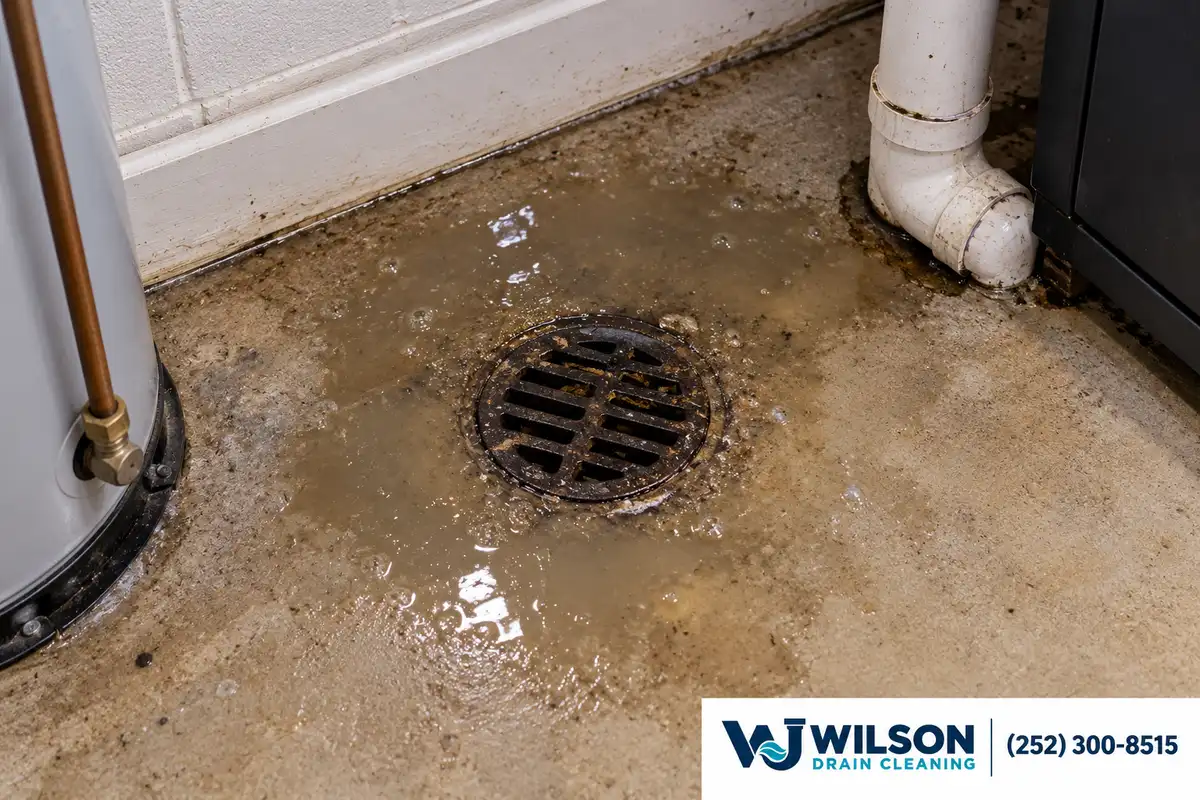
The floor drain is often the lowest opening connected to the building sewer. A main-line clog or full City main can force wastewater out there first. Stop water use. Check the property-line cleanout only from a safe position, and never remove a cap under pressure.
Will the City of Wilson Pay for My Sewer Backup
The City clears blockages within its area of responsibility, beginning at the property-line cleanout. Payment for damage is a separate issue. Report the backup to Utility Dispatch at (252) 399-2424, notify the insurer and ask both parties for their claim instructions.
Can I Use My Sink During a Sewer Backup
No. Water from the sink enters the same drainage system and can rise through the lowest fixture. Do not flush toilets, shower, run laundry or use the dishwasher until the affected line is cleared and drainage is tested.
Get a Free Quote
Call (252) 300-8515 and describe every affected fixture, where the sewage appeared and whether heavy rain is occurring. Details can be submitted through the get a quote form when the area is safe to approach.
Learn more about the technicians.
Call (252) 300-8515 ↗