Overview
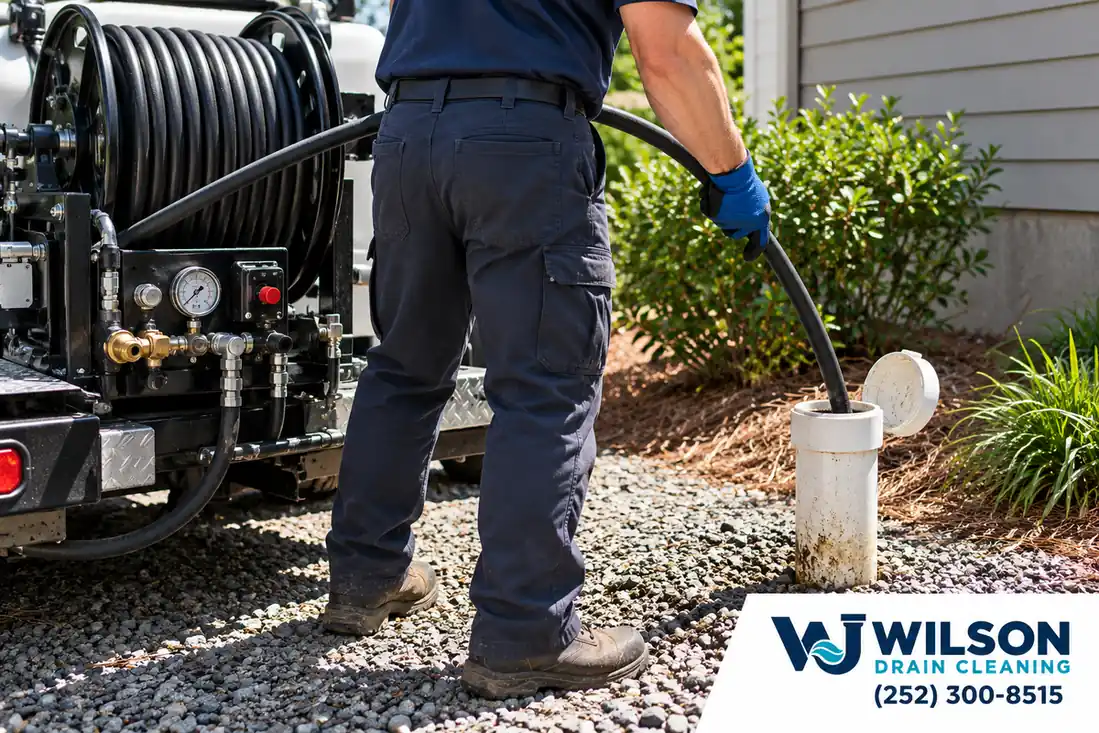
Hydro jetting in Wilson uses high-pressure water to scrub buildup from the inside of drain and sewer pipes. It cleans more of the pipe wall than a cable alone. A camera check comes first to confirm the pipe is stable enough for jetting.
Hydro jetting is a controlled cleaning process, not simply a blast of water. The pipe, blockage and access point decide the pressure, flow and nozzle.
Camera Check Before Work
A camera inspection checks the line for cracks, collapse, offset joints and weak pipe. It also locates grease, scale, roots or silt. Jetting stops if the line cannot take the planned pressure safely.
Nozzle and Pressure Selection
Penetrator nozzles open dense soft blockages. Root-cutting nozzles address fine root growth. Flushing nozzles pull loosened material toward the cleanout. Pipe diameter, material and condition guide the setup.
Cleaning Through a Suitable Access Point
An exterior cleanout is preferred when it gives safe access. The hose advances through the line while rear-facing jets scour the wall and move debris back. Indoor access is considered only when the site and drainage setup allow it.
Final Camera Pass and Video
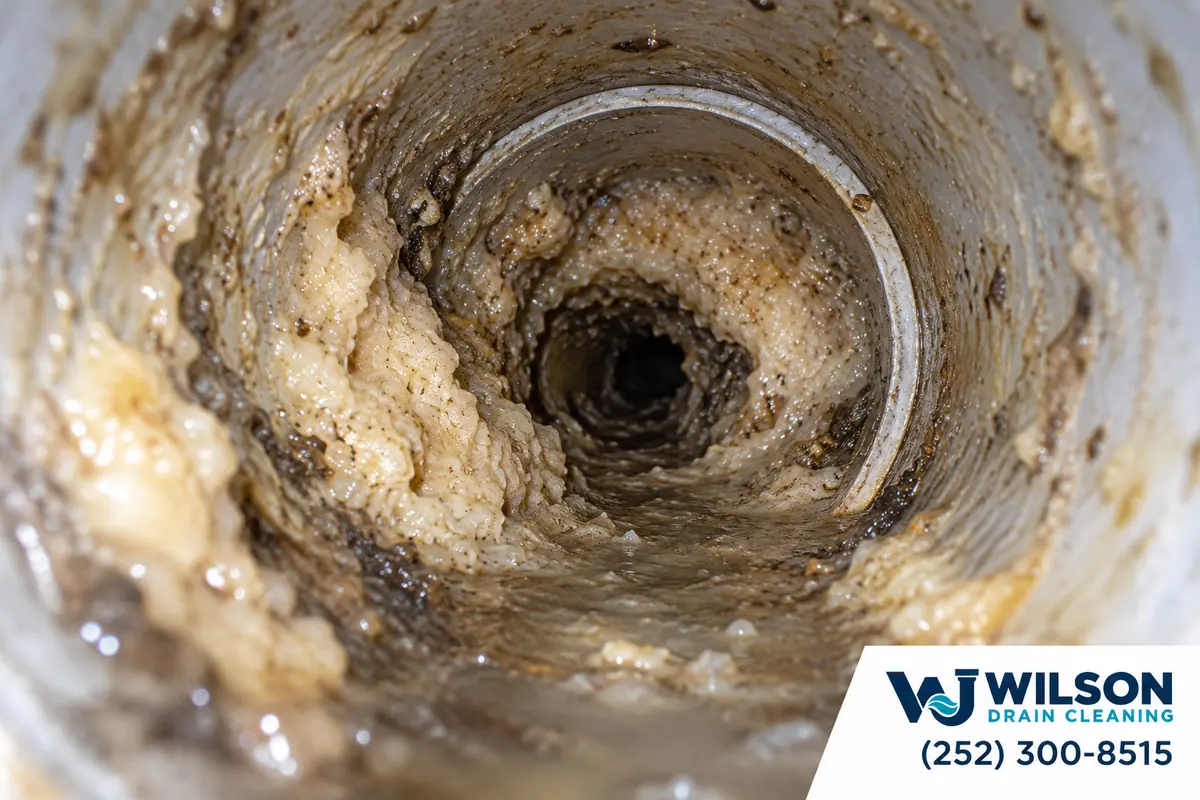
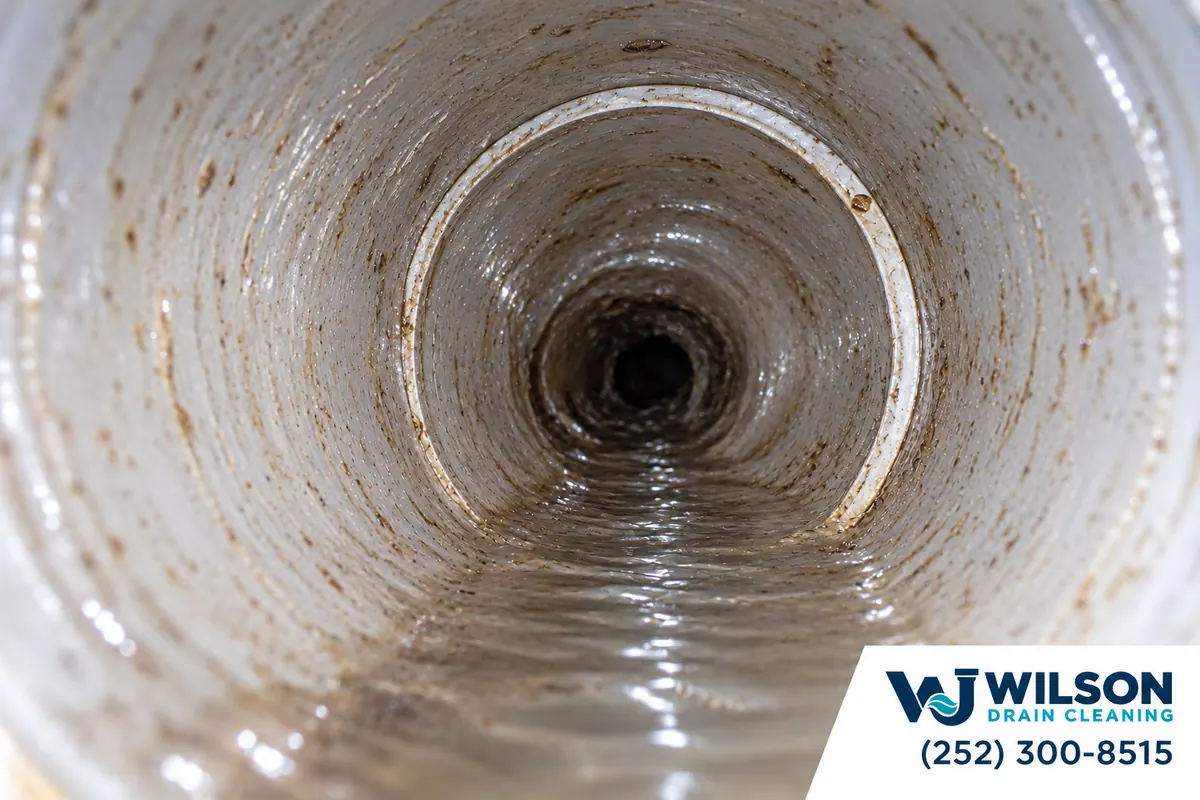
A second camera pass checks the same pipe section after cleaning. Side-by-side footage can show what changed and whether roots, damage or a low spot remain.
What Hydro Jetting Includes
Recurring grease and root restrictions need more than a narrow opening through the clog. Removing buildup from the pipe wall gives wastewater a clearer path and provides better evidence of the pipe beneath it.
The City of Wilson's fiscal year 2023 to 2024 wastewater report recorded 15 reportable sanitary sewer overflows. Grease was listed in nine incidents, including one caused by grease and debris. City crews also cleared 15 grease blockages from public sewer mains during that year. These figures describe the municipal system, not private customer jobs.
Why Hydro Jetting Matters in Wilson
The same report says most sewer backups and overflows caused by fats, oils and grease begin in residential areas. Hot grease may enter a drain as liquid, then cool and harden on pipe walls. A cable can restore an opening, but it may leave a ring of buildup behind. Hydro jetting is designed to wash more of that material away.
Wilson's public sewer system and private building drains are different responsibilities. The property owner handles piping from the building to the property-line cleanout. The City maintains the line from that cleanout toward the public main. Standing water under pressure at a property-line cleanout should be reported to the City at 252-399-2424 rather than opened fully.
How It Works Step by Step
The goal is to clean the restriction without guessing about the pipe. Each stage confirms what should happen next.
1. Inspect the line. A camera locates the buildup, measures the run and checks for broken, collapsed or badly offset pipe.
2. Choose the setup. Pressure, water flow and nozzle type are matched to the pipe material, diameter and condition.
3.
4. Jet the line in controlled passes. The nozzle opens the restriction, scrubs the wall and draws grease, scale, roots or silt toward the access point.
5. Rinse and test flow. Water is run through the line to carry loose material out and confirm drainage.
6. Inspect again. A final camera pass documents the cleaned section and identifies damage that buildup may have hidden.
A maintenance recommendation should follow the evidence. A clean, stable residential line may not need routine jetting. A restaurant line or a pipe with recurring root entry may need a planned interval.
Hydro jetting works best on material stuck to the pipe wall or spread along a long section. It is not the right answer for every stoppage.
Grease and Food Residue
Kitchen fats combine with soap, food particles and sediment. The result can coat a branch line instead of forming one solid plug. Jetting can wash that coating from sound pipe. For a small fixture blockage, kitchen sink clogs may need simpler access first.
Scale and Tuberculation
Older cast iron can develop rough mineral and corrosion deposits inside the pipe. These edges catch paper and waste. Controlled jetting may remove loose scale, but a camera must show whether the remaining wall is sound.
Fine Tree Roots
Fine roots can enter through joints and spread through the flow path. A root-cutting nozzle can clear growth inside a stable line. Jetting does not seal the opening that let roots enter. Repair may still be needed.
Before and After Examples
Clogs and Problems We Handle
Sand, Silt and Soap Sludge
Low sections and poorly flushed lines can hold heavy sediment. Rear-facing jets help pull this material toward the cleanout instead of pushing it farther into the system.
Recurring Main-Line Clogs
Repeated backups often point to grease, roots, scale, a damaged joint or a sag. Jetting can remove buildup. It cannot straighten a belly, reconnect an offset joint or repair a collapsed pipe.
How Much Does Hydro Jetting Cost in Wilson?
Current 2026 cost data places a typical professional hydro jetting visit around $350 to $600, with an average near $475. Difficult access, long lines and severe blockages can raise the total. These are national planning figures, not a Wilson quote.
The price usually changes with:
Camera work may be included or billed separately.
Is Hydro Jetting Safe for Old Pipes?
Hydro jetting can be safe for older pipe when a camera confirms the line is stable and the equipment is adjusted to its condition. A cracked, collapsed or severely offset pipe should not be jetted until the risk is addressed.
Wilson homes near Old Wilson, East Wilson and established streets around Five Points vary widely in age and plumbing history. Location alone cannot identify the pipe. A property may contain cast iron, clay, PVC or more than one material after repairs.
Orangeburg pipe needs special caution. Its layered fiber construction can soften, deform and collapse with age. If the camera suggests Orangeburg or shows a fragile wall, jetting should stop until the material and repair plan are confirmed.
The same caution applies to badly corroded cast iron and separated clay joints. Lower pressure does not make an unstable line safe. The camera findings, not the age of the neighborhood, control the decision.
Protecting Your Home and Pipes During Jetting
Pressure rises only as needed. The operator watches hose movement, water return and flow response throughout the work. Jetting stops if the line does not react as expected.
After cleaning, the access cap, nearby ground and affected fixtures are checked.
Related Services and Where We Offer This
Hydro jetting and cable cleaning solve different conditions. The broader main line cleaning page explains shared-line symptoms and access. Lines with recurring root entry may need tree root removal. Food-service lines belong under restaurant grease line cleaning.
Ask about availability in Black Creek and Rocky Mount.
FAQs
Is Hydro Jetting Better Than Snaking?
For grease, scale and fine roots, hydro jetting often cleans more completely. A snake opens or retrieves a clog. Jetting washes buildup from more of the pipe wall. A simple fixture clog or fragile pipe may still be better suited to cable cleaning.
Can Hydro Jetting Damage My Pipes?
Yes, if high pressure is used on a weak or damaged line. That is why a camera check comes first. A cracked, collapsed, severely offset or suspected Orangeburg pipe should not be jetted until its condition and repair needs are clear.
How Often Should a Line Be Jetted?
Most homes need hydro jetting only when inspection shows recurring grease, roots or heavy buildup. A problem line may benefit from service every 12 to 24 months. Restaurant lines often need a shorter interval based on use and grease-control records.
Get a Free Quote
Call (252) 300-8515 for scheduling and a price range. Describe the affected fixtures and available access through the get a quote form.
Learn more about the technicians before scheduling.
Call (252) 300-8515 ↗