Overview
Remove accumulated grease and solids before the interceptor loses working capacity. Call (252) 300-8515 to discuss grease trap cleaning in Wilson NC.
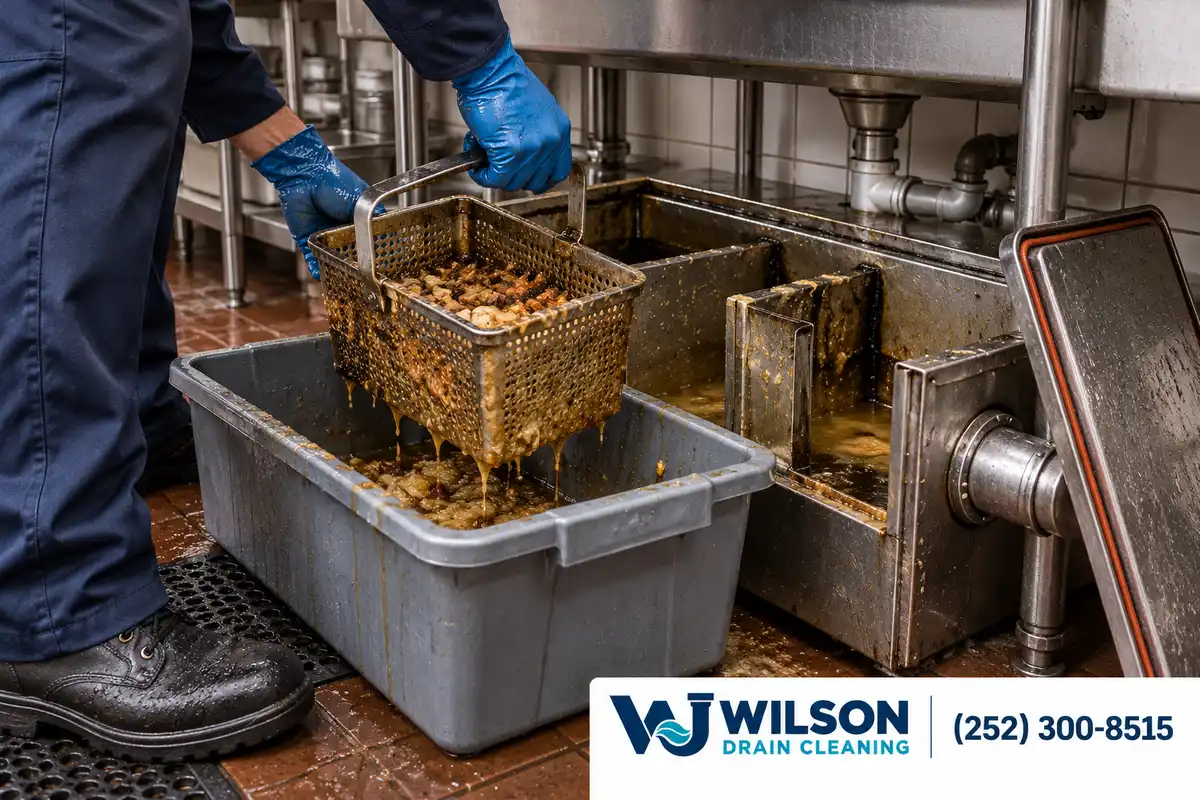
Grease trap cleaning removes brown grease, settled solids and wastewater from a kitchen trap or interceptor. The quote should identify any internal checks or connected-line work.
Service can be requested in Wilson, Elm City, Lucama, Stantonsburg, Black Creek and Sims.
The scope depends on whether the kitchen has a small point-of-use trap or a large in-ground interceptor.
What Grease Trap Cleaning Includes
A complete service may include:
- Opening the trap or interceptor safely
- Measuring the grease cap and settled solids
- Removing the contents through an authorized process
- Scraping accessible walls and internal surfaces
- Checking baffles, inlet tees and outlet tees for visible damage
- Securing covers and lids after service
- Recording the date, condition and amount removed
Pumping the vessel does not automatically clean the connected pipe. Separate line jetting may be needed when the inlet or outlet carries hardened grease. The quote should identify the vessel, lines and disposal work covered.
A grease interceptor works only while it has room to separate fats, oils, grease and solids from kitchen wastewater. When the device becomes overloaded, grease can pass into the building drain and public sewer.
Why Grease Trap Cleaning Matters in Wilson
The City of Wilson FOG program explains that grease can enter a drain as hot liquid, cool inside the system and create blockages. Wilson recorded 15 reportable sanitary sewer overflows in fiscal year 2023 to 2024. Nine identified grease as a cause or contributing cause.
Wilson’s ordinance requires grease interceptors for establishments that prepare, process or serve food when connected to the public sanitary sewer. The device must remain accessible for cleaning and inspection. Poor maintenance can also affect the restaurant itself through slow drains, odor, backups and lost kitchen time.
How It Works Step by Step
Good service removes the waste, checks the device and leaves a useful record.
1. Confirm the trap location, access and stated capacity.
2. Open the cover and measure the grease and solids where safe access allows.
3. Remove the contents using the permitted waste-handling process.
4. Scrape accessible buildup instead of removing only the top grease layer.
5. Check visible baffles, tees, seals and covers for damage or poor fit.
6. Evaluate the inlet and outlet flow before recommending pipe cleaning.
7. Close the device securely and document the visit.
North Carolina classifies grease pumped from interceptors, separators and traps as grease septage. The NC Division of Waste Management requires a septage-management permit for firms that pump, transport, store, treat or dispose of this material.
Several symptoms can point to an overloaded or damaged interceptor. The connected pipe should also be checked.
Full or Overloaded Interceptor
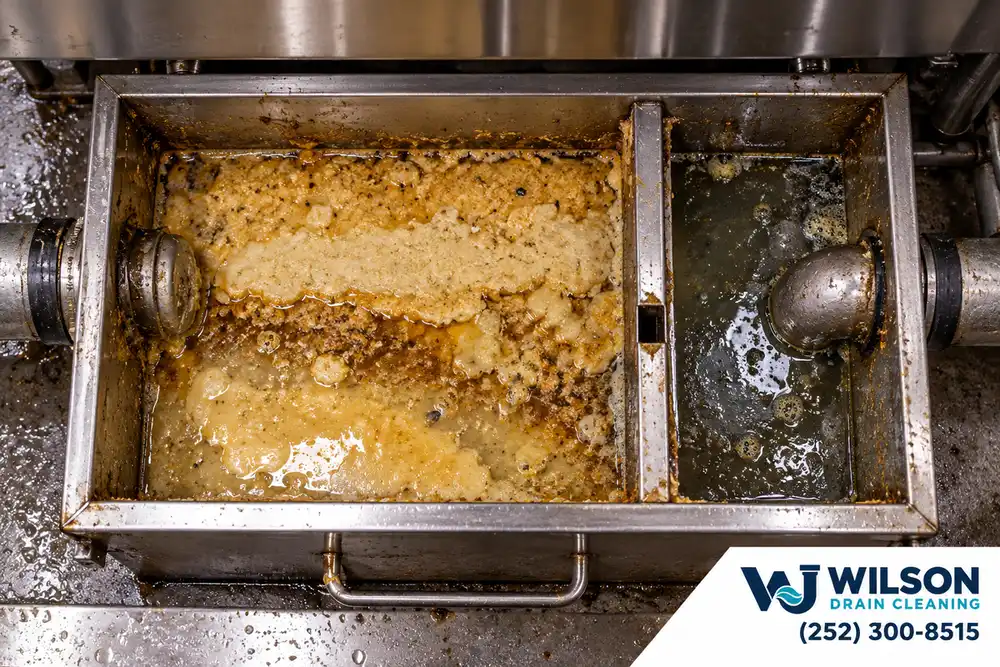
A thick grease cap and deep solids layer leave less working volume for separation. Grease may move toward the outlet instead of staying inside the device.
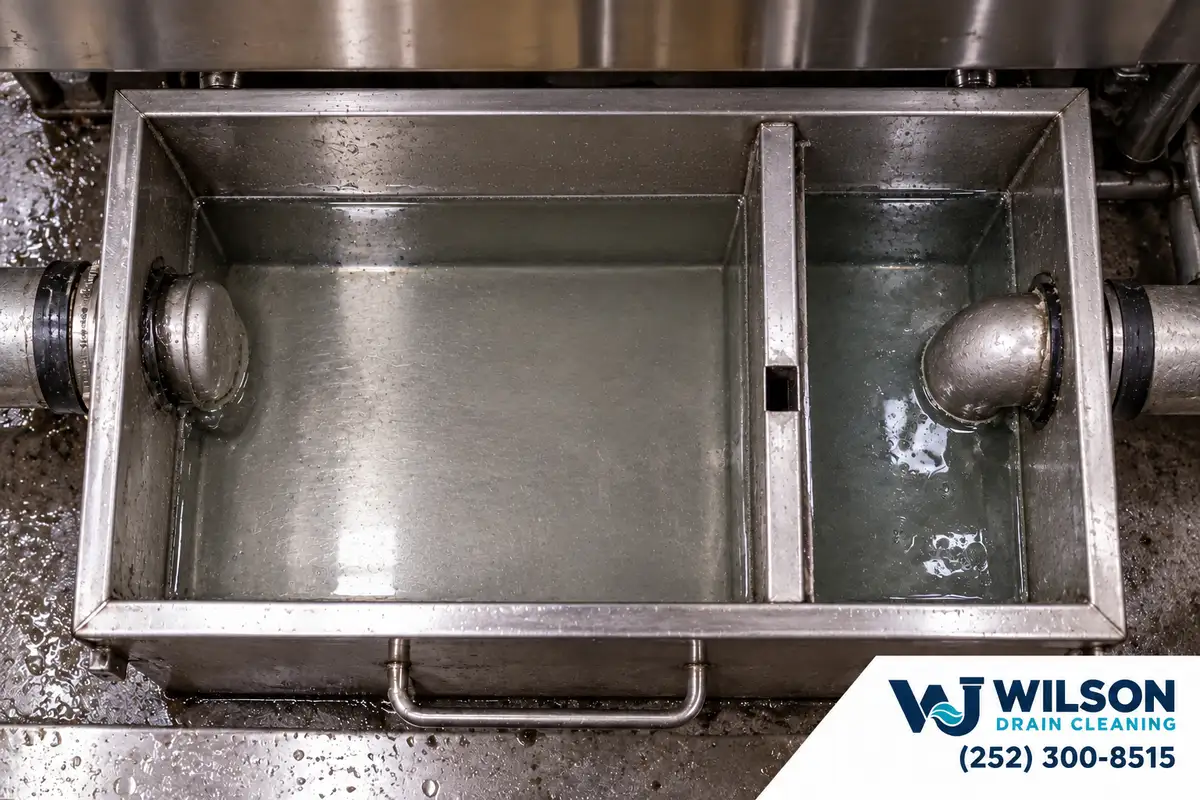
Before and After Examples
Clogs and Problems We Handle
Slow Kitchen Drains
Slow prep sinks or floor sinks may result from a restricted inlet, an overloaded trap or a blocked downstream line. Pumping alone will not correct a pipe obstruction.
Strong Grease Odor
Odor can come from accumulated waste, a loose lid, a failed seal, dry floor-drain traps or residue around the access point. The source should be confirmed before treating the smell.
Damaged Baffles or Tees
Baffles and tees help control flow through the interceptor. A missing or damaged part can reduce separation and allow grease to pass downstream.
How Much Does Grease Trap Cleaning Cost in Wilson?
Cost depends on trap size, access, waste volume, cleaning frequency and disposal distance.
Published 2026 guides place small indoor interceptor cleaning around $75 to $400 and standard restaurant pumping around $300 to $600. Larger outdoor interceptors can range from about $300 to $1,500 or more. These figures are broad market references, not Wilson prices.
How Often Does a Grease Trap Need Pumping?
Ask whether the quote includes complete pumping, scraping, disposal, lid replacement, line cleaning and a dated record. A low price for skimming only is not the same as removing liquids, grease and settled solids.
Wilson requires interceptors to be serviced as often as needed for efficient operation and no less often than every 30 days unless the city manager or designee approves another interval. That local rule is more specific than a general 30-to-90-day guideline found in many markets.
The Wilson grease ordinance also requires maintenance records to be kept for at least three years. Required details include the cleanout date, responsible person, cleaning firm, disposal method, destination, signed receipt and cost.
Cooking volume and device size still matter. Fryer use, high dish volume and food solids can fill a trap faster. Record measurements at each visit instead of waiting for an overflow.
Clean, Odor Controlled Service
The service area should remain controlled while the cover is open. Hoses and tools should avoid food-contact surfaces. Any spill near the device should be contained and cleaned promptly.
The lid, gasket and fasteners should return to a secure position. A loose cover can release odor or create a safety problem. Waste must go to an authorized receiving or disposal location, not into a storm drain, floor drain or public sanitary sewer.
Related Services and Where We Offer This
Grease-trap service can be coordinated with restaurant grease lines when the connected kitchen branches or building drain also need attention.
Nearby cities and towns
- Rocky Mount
- Nashville
- Elm City
- Lucama
- Stantonsburg
- Black Creek
- Sims
Wilson neighborhood
- Downtown Wilson
- Ward Boulevard commercial centers
- Nash Street corridor
- Goldsboro Street area
FAQs
How often should a grease trap be cleaned?
Wilson requires servicing at least every 30 days unless the city approves another interval. Some kitchens may need more frequent cleaning because of trap size, fryer use, food solids or operating volume. Use measurements and service records to identify the safe interval.
Who hauls the grease away?
Grease septage must be handled through the applicable North Carolina permitting and disposal process. Confirm the hauling firm and permit number before scheduling.
Are service records kept for inspections?
Wilson requires interceptor maintenance records to remain on file for at least three years. A complete record should identify the service date, cleaning firm, disposal method and destination, responsible person, signed receipt and cost.
Get a Free Quote
Call (252) 300-8515 with the trap location, estimated capacity, last service date and any current drain symptoms. A photo of the lid, access area or equipment label may help define the service before scheduling.
Use the get a quote form for a written request. Learn more about the technicians before booking.
Call (252) 300-8515 ↗